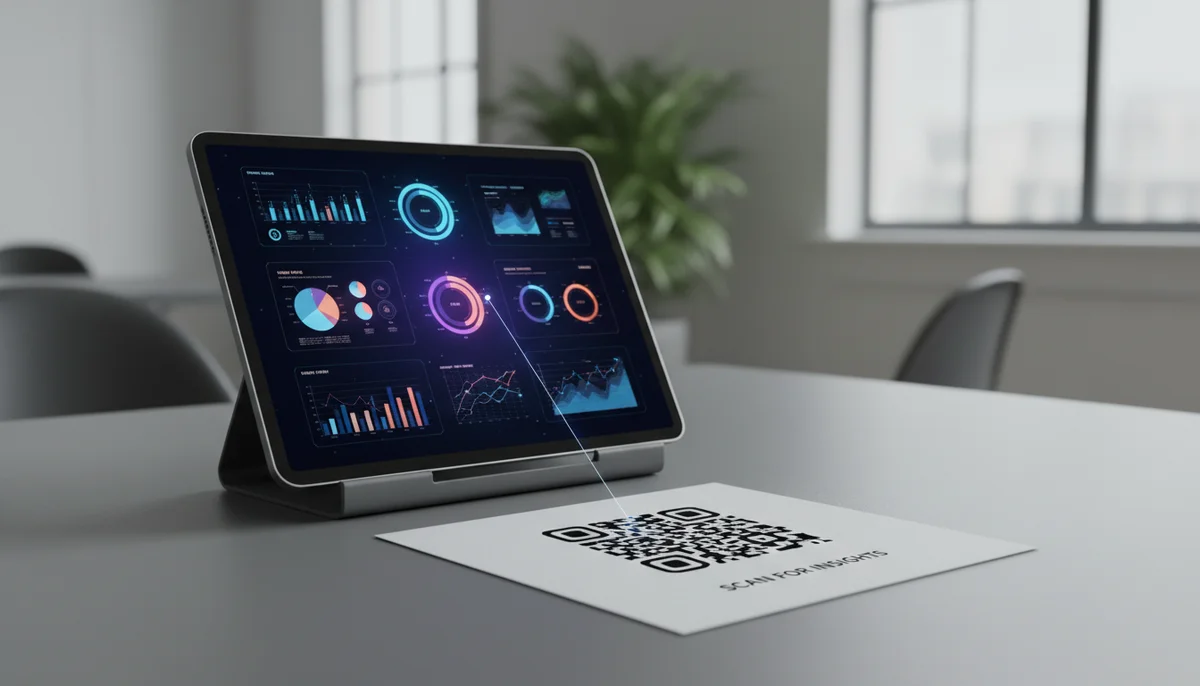
Unlocking Insights: How QR Code Analytics Boost Marketing Campaigns
Discover how QR code analytics provide real-time insights into user engagement, scan locations, and campaign performance. Optimize your marketing strategies with powerful
How QR Code Analytics Work: Unlocking Data-Driven QR Code Marketing
QR codes have evolved beyond simple digital bridges. What once seemed like a static, one-way street of information delivery has transformed into a dynamic data goldmine. For marketers and businesses keen on optimizing their digital strategies, understanding qr code analytics isn't just an advantage—it's a necessity. This advanced guide will demystify the mechanics behind QR code tracking, illustrate its power with real-world examples, and equip you with the knowledge to interpret and act on your data.
At its core, QR code analytics refers to the collection and analysis of data generated by user interactions with QR codes. It transforms a scan into a measurable event, providing invaluable insights into campaign performance, user behavior, and overall ROI. Without this data, your QR code deployments are essentially shots in the dark.
The Foundation: Dynamic QR Codes vs. Static QR Codes
The entire premise of trackable QR codes hinges on one crucial distinction: the type of QR code used.
- Static QR Codes: These codes directly embed the target URL or information. Once generated, they cannot be changed, and crucially, they cannot be tracked. There's no intermediary server to log the scan event. They're ideal for fixed information that never needs updating or tracking, like a Wi-Fi password.
- Dynamic QR Codes: This is where the magic of tracking happens. Instead of embedding the final destination, a dynamic QR code embeds a short, unique redirection URL hosted by a QR Code Generator platform. When a user scans the dynamic QR code, their device is first directed to this short URL. The platform's server logs the scan details, and then redirects the user to the actual target content (e.g., a website, video, PDF). This two-step process is what makes comprehensive Dynamic QR Codes traceable and editable even after printing.
This redirection mechanism is the bedrock of all QR code analytics. Without it, you're left with guesswork regarding your campaign's effectiveness.
What Data Does QR Code Analytics Track?
A robust QR code analytics platform collects a wealth of data points with every scan. These metrics provide a holistic view of user engagement, helping you refine your strategy.
Here are the primary types of data tracked:
- Total Scans: The cumulative number of times your QR code has been scanned. This gives you a raw count of interactions.
- Unique Scans: The number of individual devices that have scanned your QR code. This helps differentiate true reach from repeat engagement by the same user.
- Location Data (City & Country): Where your QR code is being scanned. This geographic insight is incredibly powerful for local businesses or multi-regional campaigns. Note: This is based on the IP address and is generally city/country level, respecting user privacy.
- Device Type & Operating System: Information about the user's device (e.g., iPhone, Android, tablet) and operating system (iOS, Android). This helps in optimizing your landing pages for specific devices.
- Time of Scan: The exact date and time of each scan. Analyzing these patterns can reveal peak engagement hours, allowing for better-timed promotions or content updates.
- Scan Source (Campaign/QR Code ID): If you're running multiple QR code campaigns or using several QR codes for different placements within a single campaign, the analytics can differentiate between them. This allows you to attribute performance to specific creative or location.
- Referral Source (if applicable): While not always directly from the QR code itself, some advanced integrations can provide insights into how users arrived at the content before scanning the QR code, if the content is also discoverable through other channels.
- Conversion Data: When integrated with other marketing tools (like Google Analytics, CRM, or e-commerce platforms), QR code analytics can extend beyond mere scans to track actual conversions—such as sign-ups, purchases, or downloads originating from a QR code scan.
The Mechanics: How Data is Collected and Processed
Let's break down the technical journey a QR code scan takes to become a data point:
- User Scans QR Code: A user points their smartphone camera or a QR code scanner app at your dynamic QR code.
- QR Code Decoder: The device's software decodes the QR code, retrieving the embedded short URL (e.g.,
qr.example.com/xyz123). - Redirection Request: The device sends a request to the server associated with that short URL.
- Data Logging: The QR code platform's server receives the request. Before redirecting, it records several pieces of information:
- IP Address: Used to determine approximate geographic location.
- Timestamp: The exact time and date of the request.
- User-Agent String: A line of text sent by the device's browser/app that identifies the operating system, device model, and browser type.
- QR Code ID: A unique identifier for the specific QR code that was scanned.
- Redirection to Target URL: After logging the data, the server issues a 302 Found (temporary redirect) response, instructing the user's device to navigate to the actual target URL (e.g.,
yourwebsite.com/landing-page). - Data Aggregation & Visualization: The collected raw data is then processed, aggregated, and presented in an easy-to-understand format within the platform's analytics dashboard. This is where you access your qr code analytics reports.
For advanced users, platforms often provide a QR Code API. This allows businesses to pull raw or aggregated scan data directly into their own data warehouses, CRM systems, or custom dashboards for deeper analysis and integration with other business intelligence tools. This level of integration empowers organizations to truly embed QR code performance into their broader marketing and operational strategies.
Practical Examples: Business Use Cases
Understanding the "how" is important, but seeing the "what for" is what truly brings qr code analytics to life. Here are several real-world scenarios demonstrating its power:
Retail & E-commerce: Measuring In-Store Engagement
- Scenario: A fashion boutique places Product QR Codes on clothing tags in their physical store. Scanning the QR code takes customers to a product page with more details, customer reviews, and styling tips.
- Goal: Drive online research, capture customer data, and measure the effectiveness of in-store digital touchpoints.
- Analytics Insight: The boutique notices a high volume of scans for a particular dress category during weekends. They also observe that Android users scan more frequently than iOS users, but iOS users spend more time on the linked product pages.
- Actionable Strategy:
- They prioritize updating product pages for the popular dress category, ensuring high-quality images and engaging content.
- They explore optimizing their product pages specifically for iOS users, potentially by streamlining the mobile experience to match their observed engagement patterns.
- They launch targeted social media ads promoting these popular dress categories, scheduled to run on weekends.
Marketing & Advertising Campaigns: Optimizing Print Media ROI
- Scenario: A new car dealership launches a campaign featuring different print ads in local newspapers and magazines, each with a unique URL QR Codes linking to a test drive booking page.
- Goal: Determine which print publication and ad creative generates the most qualified leads.
- Analytics Insight: QR code analytics reveals that the ad in "Luxury Lifestyle Magazine" has significantly more scans compared to the ad in the "Local Daily News." Furthermore, scans from the magazine ad are predominantly from a higher-income demographic's neighborhoods.
- Actionable Strategy:
- The dealership reallocates its advertising budget, investing more heavily in "Luxury Lifestyle Magazine" for future campaigns.
- They analyze the creative differences between the two ads to understand what resonated more with the target audience.
- They use the geographic scan data to inform their sales team about potential hot spots for new leads, allowing for more localized follow-up.
Events & Conferences: Enhancing Attendee Experience and Feedback
- Scenario: An industry conference uses PDF QR Codes on speaker slides to allow attendees to instantly download presentation materials. They also use QR codes on badges for networking (e.g., vCard QR Codes) and on session room doors for feedback forms.
- Goal: Provide seamless access to information, facilitate networking, and gather real-time feedback.
- Analytics Insight: The analytics show a massive spike in PDF downloads immediately after keynote speeches, but significantly fewer downloads for breakout sessions late in the day. Feedback QR codes for a particular speaker session also showed very low engagement.
- Actionable Strategy:
- The organizers now proactively send links to all keynote PDFs via email after the event, recognizing the high immediate demand.
- They investigate the low-engagement session feedback, potentially indicating a less engaging speaker or inconvenient timing, informing future scheduling decisions.
- They can analyze vCard QR code scans to see which types of attendees (e.g., by job title, if captured during registration) are most actively networking.
Restaurant & Hospitality: Streamlining Operations and Promotions
- Scenario: A restaurant replaces traditional paper menus with Restaurant Menu QR Codes on each table, linking to an online digital menu. They also use QR codes on takeout bags for promotions.
- Goal: Improve hygiene, offer easily updateable menus, and track the effectiveness of promotions.
- Analytics Insight: The restaurant observes a surge in menu scans during lunchtime on weekdays and dinner on weekends. They also notice that the promotional QR codes on takeout bags lead to a higher redemption rate for their "free dessert with next order" offer compared to their in-house QR code promotions.
- Actionable Strategy:
- They use the peak scan times to optimize their kitchen staffing and allocate more resources to online order management during those hours.
- They decide to focus their promotional efforts more heavily on takeout orders, perhaps developing exclusive offers for that channel, as the qr code analytics clearly show better performance there.
- They regularly update their digital menu, confident that analytics will confirm customer access without the cost of reprinting.
Strategy & Implementation
Merely collecting data isn't enough; the true power lies in how you interpret and act on it.
Interpreting Your QR Code Analytics Data
- Look for Trends, Not Just Numbers: A sudden spike in scans might indicate a viral moment, while a gradual decline could signal campaign fatigue. Identify patterns over time.
- Segment Your Data: If you have multiple QR codes for different locations, audiences, or promotions, segment your analytics. Compare performance side-by-side to understand what works best where. A well-designed analytics dashboard, often part of a Team Workspace solution, allows for easy segmentation and collaborative review.
- Benchmark Against Goals: Did your campaign meet its target number of scans? Was the engagement rate higher or lower than previous campaigns? Establish benchmarks to measure success.
- Connect to Downstream Metrics: The scan is often just the first step. Use UTM parameters on your QR code's destination URL to track further engagement in Google Analytics (e.g., bounce rate, time on page, conversion events). This provides a fuller picture than just raw scan data.
Optimizing Your QR Code Campaigns with Insights
- A/B Testing with Dynamic QR Codes: Create two identical QR codes, but link them to slightly different landing pages (e.g., different headlines, CTAs, or imagery). Deploy them in similar environments and use qr code analytics to see which performs better. You can also A/B test the QR code's visual design or its surrounding call-to-action text.
- Refine Geo-Targeting: If scans are low in a particular region you targeted, investigate why. Is the messaging irrelevant there? Is the placement suboptimal? Adjust your campaign's geographic focus or tailor content specifically for underperforming areas.
- Optimize Timing: If your analytics show peak scans between 10 AM and 2 PM, ensure your social media pushes, email announcements, or in-store staff are ready to support during those high-engagement windows.
- Improve Content Engagement: If your QR code leads to a video, and analytics show high scans but low watch times, consider optimizing the video length, quality, or its opening hook. If it's a form, simplify the fields.
- Adjust Call to Action (CTA): Test different CTAs surrounding your QR code. Does "Scan for 10% Off" perform better than "Scan for Details"? The data will tell you.
Integrating QR Code Analytics with Your Wider Marketing Stack
For truly advanced digital marketing, QR code analytics shouldn't operate in a silo. Integrating this data with your existing marketing infrastructure unlocks powerful synergies:
- CRM Systems: Connect scan data to your customer relationship management system. If a lead scans a specific QR code, this action can trigger follow-up emails, update their profile, or notify a sales rep.
- Email Marketing Platforms: Use scan behavior to segment your email lists. For example, customers who scanned a "new product launch" QR code could receive a follow-up email with more detailed information.
- Web Analytics (e.g., Google Analytics): By tagging your QR code destination URLs with UTM parameters, you can track the full user journey from QR scan to website conversion. This bridges the gap between offline interaction and online behavior.
- Business Intelligence (BI) Tools: Export or push your QR code analytics data via a QR Code API to your BI dashboards. This allows you to combine QR code performance with other sales, marketing, and operational data for a comprehensive business overview.
This integration ensures that QR code deployment isn't just an isolated tactic but a fully embedded component of your data-driven marketing ecosystem.
Conclusion
In the rapidly evolving landscape of digital marketing, understanding and leveraging qr code analytics is no longer optional—it's essential for competitive advantage. Dynamic QR codes transform a simple scan into a treasure trove of actionable data, offering unparalleled insights into user behavior, campaign effectiveness, and overall ROI.
By mastering the mechanics of how data is collected, dissecting the metrics that matter, and implementing data-driven strategies, you move beyond guesswork. You gain the power to optimize your campaigns in real-time, personalize user experiences, and attribute tangible value to your offline-to-online touchpoints. Embrace the analytical power of QR codes, and unlock a new dimension of performance for your marketing efforts.
Ready to Get Started?
Explore our tools to enhance your QR code workflow
Free QR Code Generator
Create unlimited QR codes for free with our easy-to-use generator. No signup required.
Start CreatingTeam Workspace
Collaborate with your team on QR code projects. Share templates, manage permissions, and track usage.
Explore TeamsQR Code API
Integrate QR code generation into your applications with our RESTful API. Unlimited requests, high performance.
Explore APIAll tools are available with a free plan to get you started
Frequently Asked Questions
Find quick answers to common questions about this topic
What insights can QR code analytics provide?
QR code analytics reveal crucial data like total scans, unique users, scan locations, device types, and the time of day scans occur, offering a holistic view of user engagement.
How do QR code analytics help improve marketing campaigns?
By tracking real-time performance, you can identify which campaigns are most effective, optimize underperforming ones, and make data-driven decisions to boost engagement and ROI.
Can I track individual QR code performance?
Yes, advanced QR code platforms allow you to track the performance of each individual dynamic QR code, providing granular data for specific campaigns or assets.
What's the difference between static and dynamic QR code analytics?
Only dynamic QR codes allow for comprehensive analytics tracking, including scan data, editing content after printing, and real-time performance monitoring, unlike static codes.
Is it possible to see where my QR codes are being scanned?
Absolutely. Geo-location data from QR code analytics can show you the specific cities or regions where your QR codes are scanned most frequently, aiding localized marketing efforts.
Related Articles
Continue exploring QR code strategies and best practices

How QR Codes Increase Customer Engagement and Loyalty
Discover how dynamic QR codes drive customer engagement, loyalty, and interaction. Track campaign performance with real-time analytics from QR-Build. Start boosting engag

QR Code Lead Generation: Strategies to Capture More Prospects
Discover how dynamic QR codes can revolutionize your lead generation efforts. Learn effective strategies for capturing more prospects and boosting conversions with QR-Bui
10 Creative QR Code Campaigns to Boost Your Marketing
Discover 10 creative QR code campaigns that boosted engagement and sales. Learn how dynamic QR codes and real-time analytics can transform your marketing strategy.

Dynamic QR Code Explained: What It Is, How It Works, & Benefits
Discover what a dynamic QR code is, how it works, and its key advantages for marketing and business. Learn why editable QR codes are essential for modern campaigns with Q
Comparing Dynamic QR Code Tools: Which Platform is Right for You?
Explore leading dynamic QR code tools and platforms. Compare features, analytics, and pricing to find the best solution for your business needs and marketing campaigns.

Boost Your Sales: Essential QR Code Retail Marketing Strategies
Elevate your retail strategy with QR code marketing. Learn how dynamic QR codes enhance customer engagement, track campaigns, and drive sales in your store. Explore innov

Product Marketing Manager
Emma helps businesses leverage QR codes for marketing campaigns. She has worked with over 200 companies to optimize their QR code implementations.