vCard QR Code Generator for Contact Sharing

Create a contact QR code that lets people review and save your name, phone, email, company, job title, and website. Choose static vCard for fixed details or dynamic vCard when you need an editable contact page.

Digital Business Card

Transform your traditional business card into a smart, scannable vCard. With a single scan, contacts can save your phone number, email address, and social profiles directly into their device. Never miss a connection again—share your details instantly at events, meetings, or networking sessions.

1 / 21

Contact QR Code vs vCard QR Code

Contact QR code describes the user intent; vCard identifies the contact-data format or hosted vCard experience used to fulfill it. Both should lead to a reviewable contact preview rather than silently saving data.

Use vCard when the intended action is saving a person’s contact details. Use a business page for company information or a URL QR when the intended action is visiting a webpage.

What a vCard QR Code Does

  • Opens a contact preview so the scanner can choose what to save
  • Shares core fields without asking someone to type them manually
  • Works on business cards, badges, email signatures, and presentation slides
  • Keeps fixed contact data inside a static QR code when offline access matters
  • Supports later edits and scan analytics through a dynamic vCard when available in your plan

How to Make a QR Code That Saves a Contact

Choose static or dynamic vCard, enter only supported fields, customize the design, review the contact preview on multiple phones, and test the final placement.

1

Choose static or dynamic vCard

Base the decision on field requirements, future edits, offline behavior, analytics needs, and the account plan.

2

Enter supported fields

Static accepts core identity and contact fields; dynamic adds a second phone, image, summary, address, and social-network links.

3

Customize without reducing scannability

Use strong contrast, a clear quiet zone, and a logo size that still scans reliably.

4

Review the phone prompt

Confirm how iPhone and Android label each field and verify that URLs, email addresses, and phone numbers are correct.

5

Test the final placement

Scan the actual card, badge, signature, or slide at the intended size and distance before distribution.

What Is a vCard QR Code?

A vCard QR code shares structured contact information through a scan. On a compatible phone, it opens a contact preview with the fields included in the code or dynamic contact page; the scanner then chooses whether to save them.

The static form supports first and last name, phone, email, company, job title, and website. The dynamic form also supports an alternative phone number, profile image, summary, postal address, and social-network links.

Use the MeCard QR generator for a simpler contact format, a business page QR code for company hours and services, or the business-card QR guide for print placement and sizing.

Static vCard fields

The static form supports first name, last name, phone, email, company, job title, and website.

Dynamic vCard fields

The dynamic form supports name, image, two phone fields, email, website, company, position, summary, postal address, and social-network links.

Editing after print

Dynamic vCard data can be edited without replacing the QR pattern. Static vCard data is encoded in the pattern and requires a new code when it changes.

Contact-save consent

A compatible phone shows a preview; the scanner chooses whether to save the contact and may see different field labels depending on the contacts app.

Static vs Dynamic vCard QR Codes

Static vCard: Fixed Contact Data

The contact fields are encoded in the QR pattern. It can work without a managed redirect, but changing a field requires generating and distributing a new code.

Dynamic vCard: Editable Contact Page

The QR opens an account-managed vCard page. You can update supported fields without changing the printed pattern and use scan analytics when included in your plan.

Choose Before Printing

Use static for stable personal details. Consider dynamic for changing roles, team cards, long print runs, or campaigns where scan measurement matters.

Digital Business Card Is a Secondary Use Case

This page focuses on vCard and contact QR generation. A digital business card describes how the contact experience is presented, not a separate QR data format.

How to Create a vCard QR Code

  1. Choose dynamic vCard or static vCard based on whether the details may change

  2. Enter the supported contact fields you want to share

  3. Customize the QR design while preserving contrast and the quiet zone

  4. Scan the preview on iPhone and Android and review every displayed field

  5. Download the final QR code and test it again at its real print or screen size

Paper Business Card vs vCard QR Code

Contact-sharing task Paper business card vCard QR code
Save contact Manual typing Contact preview after scanning
Core contact fields Limited by card space Included in the contact payload or page
Edit after printing Requires a reprint Dynamic vCard only
Scan analytics Not available Dynamic vCard, subject to plan
Offline contact data Printed text Static vCard

A printed card provides context, while a vCard QR code removes the need to type contact details. The phone still shows a preview and the recipient decides whether to save it.

Use static vCard for stable details encoded in the QR itself. Use dynamic vCard when an account-managed contact page, later edits, or scan analytics are important; feature availability depends on the current plan.

Contact Sharing Methods Compared

The right method depends on whether you need contact saving, later edits, analytics, or a destination outside a contacts app.

Method Primary action Editable after print Analytics Offline contact data
Static vCard QR Review and save fixed contactNoNoYes
Dynamic vCard QR Open managed contact pageYesPlan-dependentNo
MeCard QR Review and save simpler contactDepends on QR typeDepends on QR typeStatic option
Business page QR View company informationDynamic pagePlan-dependentNo
URL QR Open a webpageDynamic URL onlyDynamic, plan-dependentNo

Which Contact QR Format Should You Use?

Choose the route according to the action: save one person, view a company page, open a website, or follow printed-business-card guidance.

vCard QR Code

Best when the scanner should review and save a person’s contact details.

Choose static for fixed core fields or dynamic for its richer contact page and later edits.

MeCard QR Code

A simpler contact-data alternative when fewer fields are enough.

Compare the MeCard QR generator before choosing a format.

Business Page QR Code

Best for company hours, location, services, and broader business information.

Use the business page QR generator instead of forcing company-level content into one personal contact.

URL QR Code

Best when the scan should open a website rather than a contact preview.

Create a URL QR code for a portfolio, booking page, or other web destination.

Common vCard Generator Questions

What fields can I add to a static vCard QR code?

The static form includes first name, last name, phone, email, company, job title, and website. First name is required; the other contact fields are optional.

What additional fields does dynamic vCard support?

The dynamic form adds an alternative phone number, profile image, summary, street, postal code, city, state, country, and supported social-network links.

Can I edit a vCard QR code after printing?

Dynamic vCard fields can be edited through the account flow without replacing the printed QR pattern. Static vCard fields are fixed and require a new QR code when they change.

Are analytics included?

Scan analytics apply to managed dynamic QR codes. Availability and detail depend on the current account plan; check the plan before relying on analytics for a campaign.

Who Uses vCard QR Codes?

  • Sales representatives sharing direct contact details

  • Recruiters meeting candidates at career events

  • Consultants and freelancers networking with clients

  • Speakers and exhibitors using conference badges or slides

  • Real estate agents placing contact details on printed materials

  • Teams standardizing employee contact cards

Where to Use a Contact QR Code

Networking and Introductions

Show the code on your phone or a printed card so a new contact can review your details before saving them.

Events and Conferences

Place a tested vCard QR code on booth signs or attendee materials. Use an email QR code instead when the desired action is composing a message rather than saving a contact.

Email Signatures

Add a compact QR image with a label such as “Scan to save contact,” while keeping phone and email visible as accessible text.

Conference and Staff Badges

Use a short call to action and enough physical size for scanners standing at normal conversation distance.

Printed Business Cards

Use the business-card QR guide to choose placement, quiet zone, contrast, and final test size.

Presentation Slides

Put the code on a closing slide long enough for the audience to scan, with the presenter’s name and the expected action beside it.

vCard QR Code Use Cases by Role

Use vCard when a person’s contact record is the intended result, and label the QR so scanners know what will open.

Sales representatives

Share direct phone, email, company, title, and website after a conversation.

Use dynamic vCard for long print runs when rep details may change, subject to plan availability.

Recruiters

Let candidates save recruiter contact details at career fairs and interviews.

Keep the contact focused; use a separate URL or form QR when the primary action is applying or booking.

Consultants and freelancers

Share professional contact details during client meetings and networking events.

Use the website field for one primary professional destination rather than overloading the contact record.

Conference speakers

Place a contact QR on the closing slide or speaker badge for follow-up.

Test scan distance and leave enough time for the audience to open the contact preview.

Real estate agents

Share agent contact details on cards and property materials.

Use a separate property URL or PDF QR for listing details; keep vCard focused on the agent contact.

Company teams

Create consistent employee contact cards for customer-facing roles.

Confirm dynamic QR limits and plan entitlements before producing cards in volume.

vCard QR Code Mistakes to Avoid

  • Claiming every field works in static vCard

    Use only first and last name, phone, email, company, job title, and website for the static form. Choose dynamic vCard for its additional supported fields.

  • Skipping the contact preview

    Test on iPhone and Android and verify field labels, international phone formatting, email, website, and address before publishing.

  • Using static data for a changing role

    Choose dynamic vCard before a large print run if phone, title, company, or other details may change, and confirm the required plan features first.

  • Printing without a quiet zone

    Keep clear space around the QR code, maintain strong contrast, and test the actual material at the intended scanning distance.

iPhone and Android Contact Compatibility

Modern iPhone and Android cameras can recognize QR codes, but the contact preview and supported field labels vary by operating system and contacts app. Test the final output on both platforms; never assume a scan saves the contact automatically.

See vCard QR Codes in Action

Discover how professionals use vCard QR codes across different contexts to make networking faster, easier, and more effective.
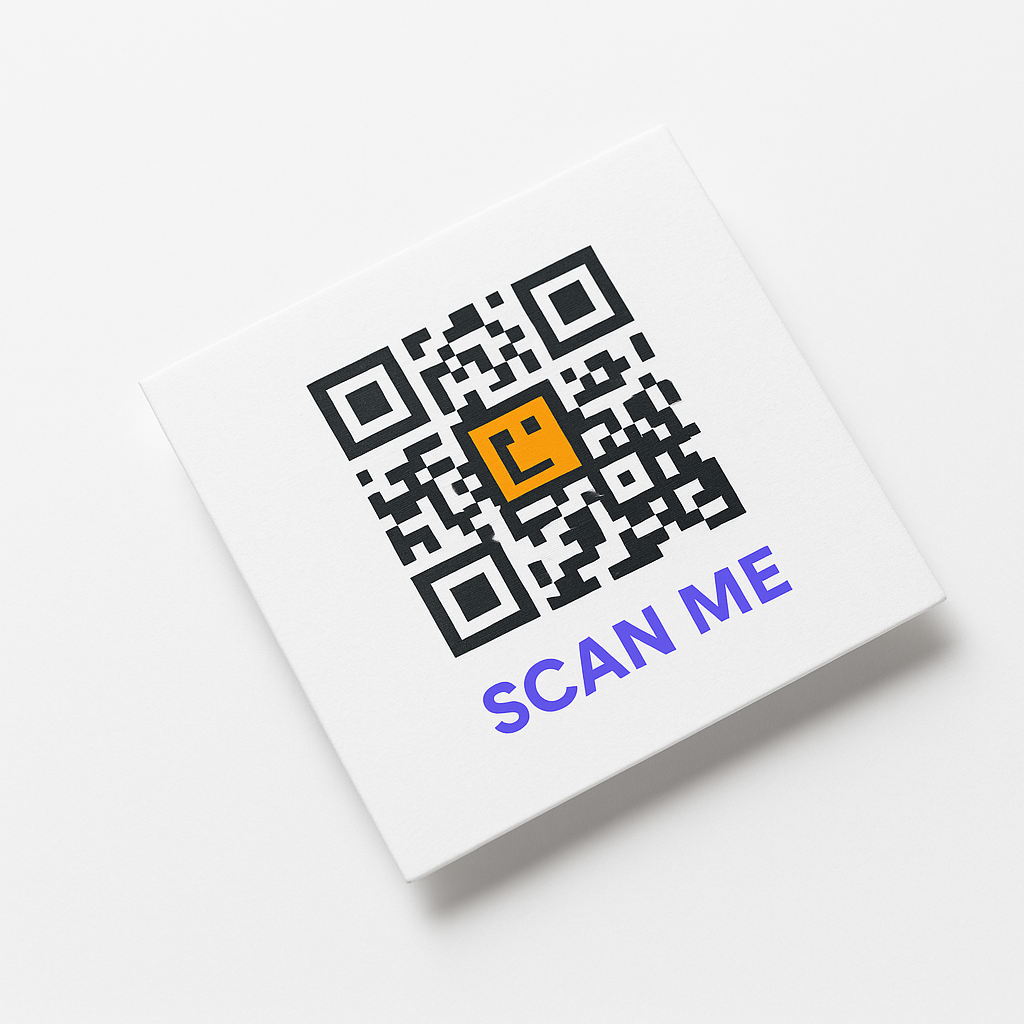
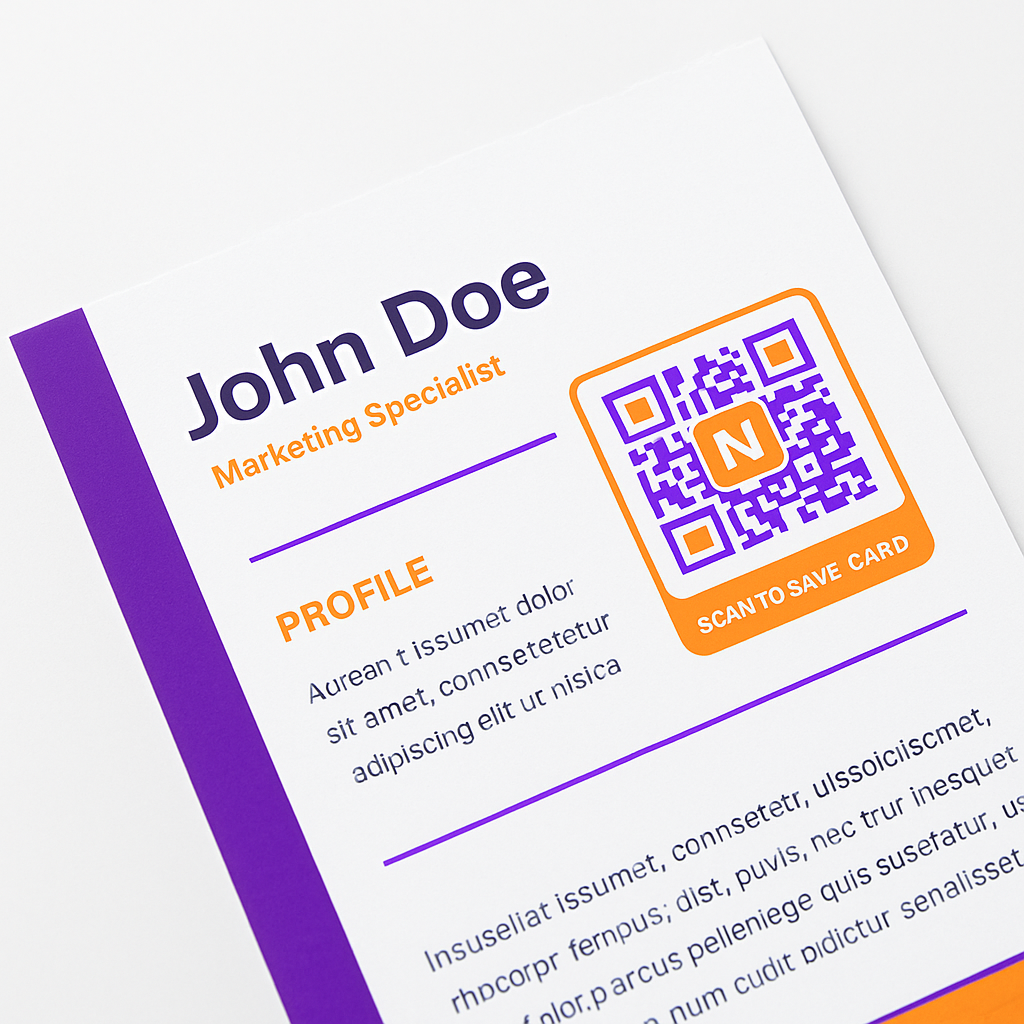
vCard QR code on business card example

Business Cards & Print Materials

Add vCard QR codes to business cards, letterhead, and promotional materials for instant contact sharing.
vCard contact preview on mobile phone

Digital Contact Management

Open a vCard contact preview so the scanner can review the details before saving.
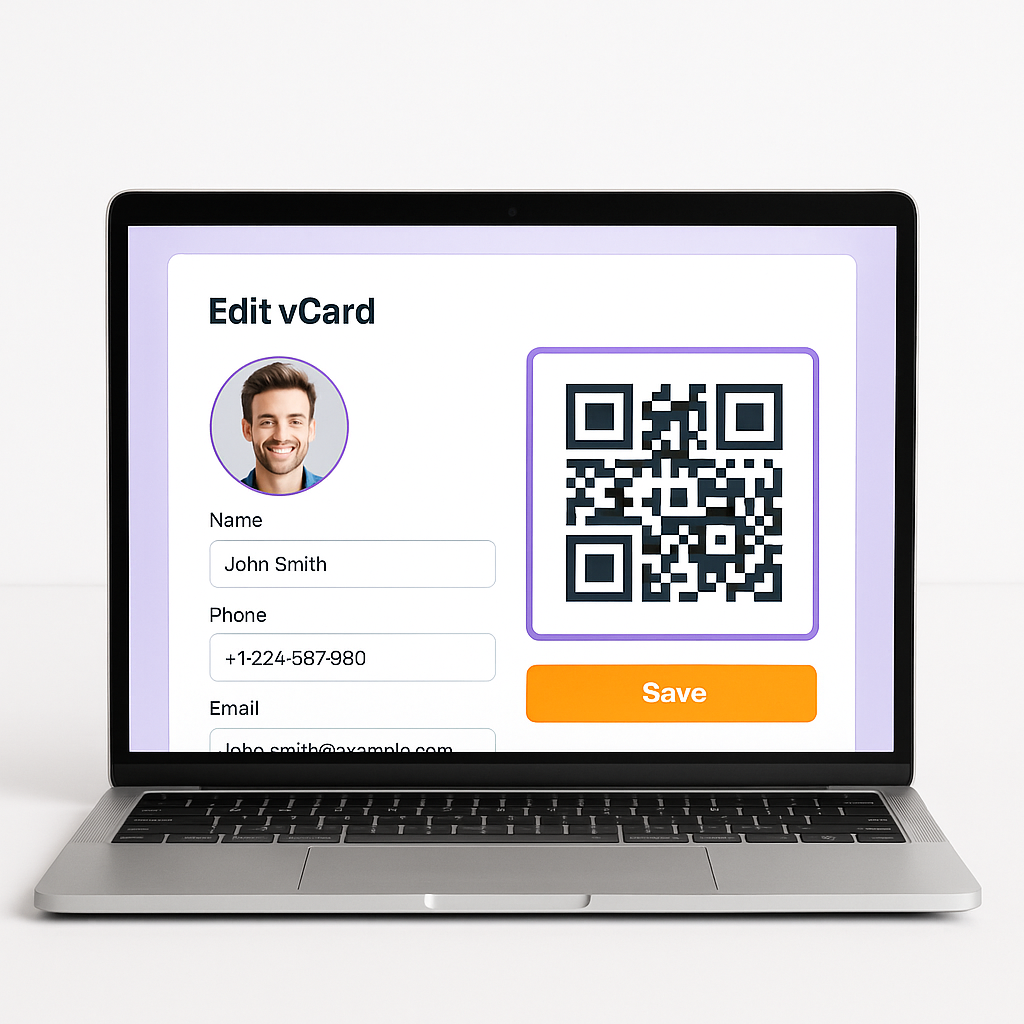
Customizing vCard QR code design

Professional Customization

Customize your vCard QR code with your logo, brand colors, and professional styling.
Dynamic vCard website and social links

Website and Social Links

Use the supported dynamic vCard fields for a website and selected social-network links.
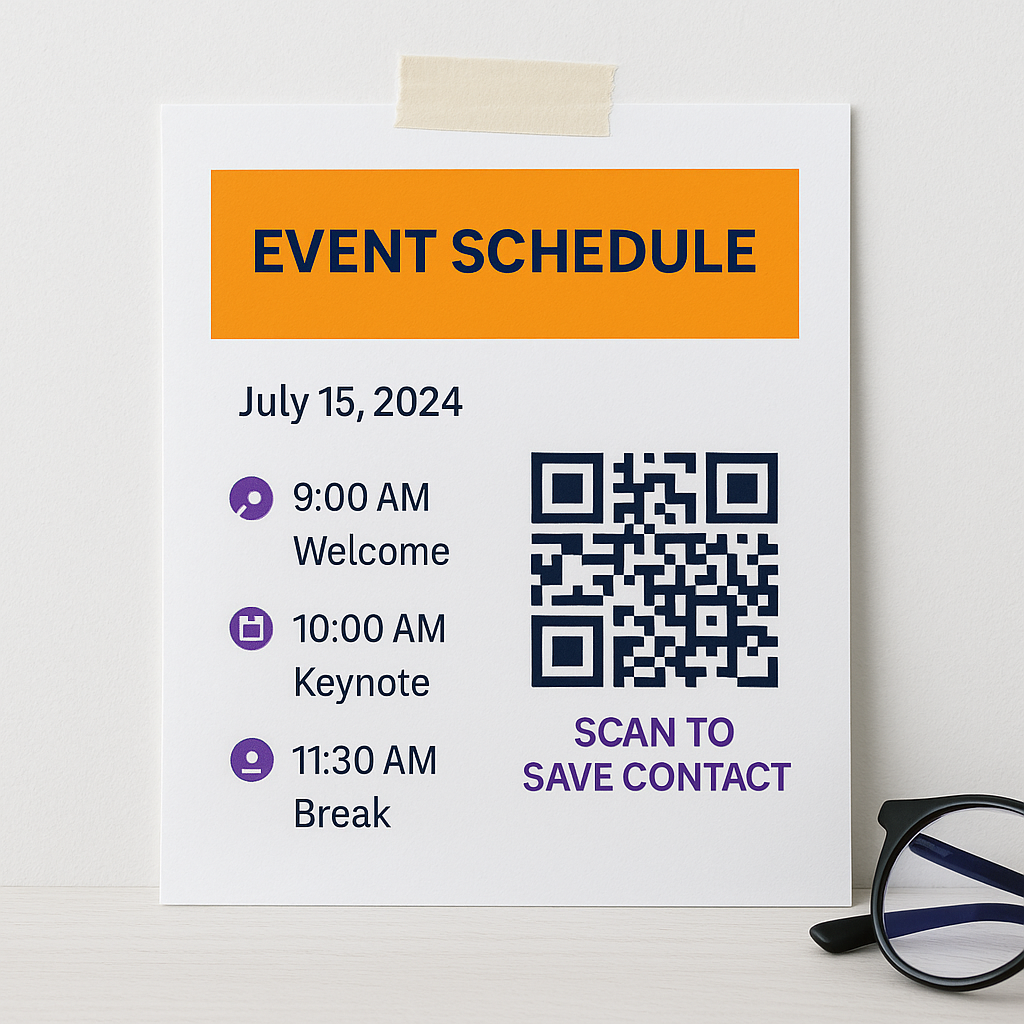
vCard QR code for events and conferences

Event & Conference Networking

Share your contact information at events, conferences, and networking sessions.
vCard QR code on product materials

Product & Service Materials

Include your professional contact details on packaging, brochures, and marketing materials.
Static and dynamic vCard QR options

Static and Dynamic Options

Choose fixed contact data or an editable hosted vCard based on your print and account needs.
Reviewable vCard QR contact design

Reviewable Contact Cards

Create a branded contact experience that lets scanners review details before saving.

Create a Contact QR Code

Choose the vCard format that matches your fields and editability needs, then test the contact preview before sharing.

Create Your vCard QR Code

Frequently Asked Questions

What is a vCard QR code?

It is a QR code that presents structured contact information. A compatible phone shows a preview, and the scanner chooses whether to add the details to a contacts app.

Does scanning automatically save the contact?

No. The phone normally opens a contact preview or vCard page. The scanner reviews the details and confirms the save action.

What does the static vCard form support?

First name, last name, phone, email, company, job title, and website. The QR name labels the saved code in QR-Build and is not a contact field.

What does the dynamic vCard form add?

It adds a second phone number, profile image, summary, postal-address fields, social-network links, templates, and contact-page styling.

Should I choose static or dynamic vCard?

Choose static for fixed contact details encoded in the QR itself. Choose dynamic when supported fields may change or when account-managed scan analytics are required.

Can I edit the contact after printing?

Only the dynamic vCard can be edited without replacing the printed QR pattern. A static vCard must be regenerated and redistributed when its encoded fields change.

Does a vCard QR code work offline?

A static vCard can expose its encoded contact data without a managed redirect. A dynamic vCard needs network access to open its hosted contact page.

Are dynamic editing and analytics free?

Plan entitlements can change. Check the current pricing and account limits for dynamic editing, QR quantity, and analytics before printing or launching a campaign.

Can I use a vCard QR code on a business card?

Yes. Keep the code large enough for the material and viewing distance, preserve a quiet zone, add a descriptive scan label, and test the final printed sample.

Is MeCard the same as vCard?

No. Both share contact data, but MeCard is a simpler format. Compare the MeCard QR generator when you need fewer fields.

Supported vCard Generator Features

  • Static fields: first name, last name, phone, email, company, job title, and website
  • Dynamic additions: alternative phone, image, summary, postal address, and social-network links
  • Contact-page templates and color customization for dynamic vCard
  • QR color, frame, and optional logo controls
  • Editable dynamic contact data without replacing the QR pattern
  • Dynamic scan analytics when available in the account plan
  • Static contact payload for stable details
  • Download options for print and digital use

Make Contact Sharing Easier to Save

Create a tested vCard QR code for networking, events, signatures, badges, presentations, or printed business cards.

Start the vCard Generator
QR Code - QR-Build

Free vCard QR Code Generator

Create vCard QR