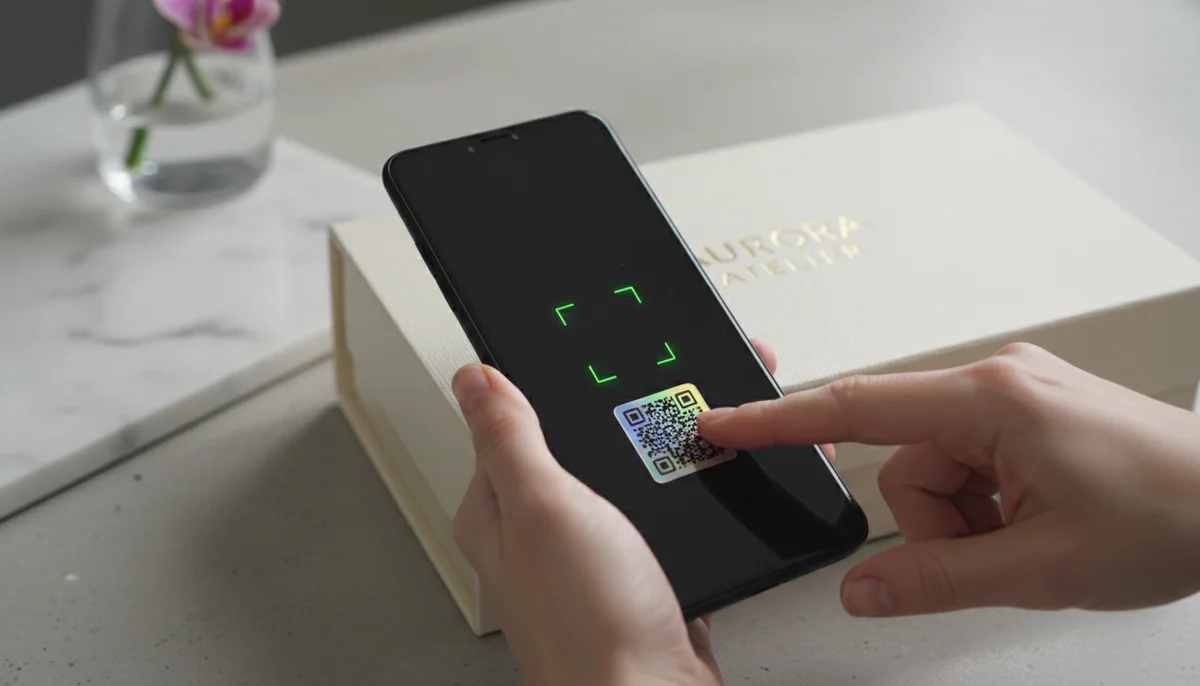
Secure Your Brand with QR Code Product Authentication
Discover how QR code product authentication protects your brand from counterfeits. Learn to use dynamic QR codes for secure verification, enhancing consumer trust and sup
QR Codes for Product Authentication: Securing Brands and Empowering Consumers
In an age rife with sophisticated counterfeiting and supply chain complexities, the integrity of a product is paramount. Consumers demand authenticity, brands strive to protect their reputation, and businesses need robust solutions to combat fraud. This is where QR code product authentication emerges as a powerful, accessible, and highly effective tool.
By leveraging the ubiquitous QR code, companies can create a transparent, verifiable link between their physical products and a secure digital identity. This article delves into how QR codes are revolutionizing product security, offering practical insights for businesses looking to fortify their brand and build unparalleled consumer trust.
Why Product Authentication Matters More Than Ever
The global counterfeit market is a multi-billion dollar industry, impacting virtually every sector from luxury goods and pharmaceuticals to electronics and apparel. The ramifications extend far beyond lost sales.
- Erosion of Brand Reputation: Counterfeit products, often of inferior quality, tarnish a brand's image and dilute its value.
- Consumer Safety Risks: Fake pharmaceuticals, food items, or electronic components can pose serious health and safety hazards, leading to tragic consequences and significant legal liabilities.
- Loss of Consumer Trust: When buyers cannot be certain of a product's authenticity, their confidence in the brand plummets, impacting future purchasing decisions.
- Supply Chain Vulnerabilities: Counterfeits disrupt legitimate supply chains, making inventory management and quality control increasingly difficult.
- Financial Impact: Direct revenue loss from fakes, along with the costs associated with recalls, investigations, and legal battles, significantly harms a company's bottom line.
A proactive approach to product authentication is no longer a luxury but a necessity for survival and growth in today's market.
How QR Code Product Authentication Works
At its core, QR code product authentication provides a unique digital fingerprint for each physical item. This system relies on a secure, scannable code that links to a backend database, allowing for instant verification of authenticity.
Here's a breakdown of the process:
- Unique QR Code Generation: Each individual product unit receives a unique QR code. This isn't just a generic code; it's a specific, serialized code that differentiates one item from another, even within the same batch.
- This uniqueness is critical. Instead of a single static QR code for an entire product line, authentication demands a new, distinct code for every single unit.
- Our platform, for instance, offers a Bulk QR Generator specifically designed for creating thousands of unique codes efficiently, or for more advanced integration, the QR Code API allows direct generation within your existing systems.
- Embedding Product Data: The unique QR code is linked to specific data points in a secure database. This data might include:
- A unique serial number or UUID (Universally Unique Identifier).
- Manufacturing date and location.
- Batch number.
- Product specifications.
- Distribution channel information.
- A cryptographic hash for enhanced security.
- Physical Integration: The QR code is printed directly onto the product packaging, labels, or even embedded into the product itself. For optimal security, tamper-evident labels or advanced printing techniques can be employed.
- Consumer Verification: A consumer scans the QR code using any standard smartphone camera. The scan directs them to a secure web page (often via a
dynamic QR code), which queries the backend database. - Instant Authenticity Check: The web page instantly displays the product's authenticity status. This can include:
- "Authentic Product" with matching details (serial number, manufacturing date).
- "Potentially Counterfeit" if the code is invalid, duplicated, or has been scanned suspiciously many times in different locations.
- "Expired Product" if the product has a shelf life linked to the code.
- Additional information like warranty status or product details can also be displayed.
- Data Logging and Analytics: Every scan is logged, providing invaluable data.
QR code analyticstrack scan frequency, locations, device types, and more. This data is crucial for identifying potential counterfeit hotspots or unusual scanning patterns. Our QR Code Analytics service provides detailed insights into these interactions.
The power of dynamic QR codes is particularly evident here. A dynamic QR code can be updated even after printing, allowing brands to change the linked verification URL, update product information, or even revoke a code if a product is found to be counterfeit or recalled. This flexibility is not possible with static QR codes, which are permanently linked to a single destination.
Key Features of an Effective QR Code Authentication System
A robust QR code authentication system requires more than just generating codes. It needs a well-thought-out design to be truly effective.
- Unique, Secure Codes: Each code must be individually serialized and ideally encrypted or hashed to prevent easy replication. The underlying data linked to the code must be securely stored.
- Tamper-Evident Integration: The physical application of the QR code should make it difficult for counterfeiters to remove or duplicate without visible damage. This might involve security seals, destructible labels, or direct etching.
- User-Friendly Verification: The scanning process should be seamless and accessible to all consumers using standard smartphones. The verification portal should be intuitive, providing clear, concise results.
- Robust Backend Database: A secure, scalable database is the backbone of the system. It must store all unique product IDs and their associated data, be resistant to cyber threats, and offer real-time query capabilities.
- Comprehensive
QR Code Analytics: The ability to monitor scan data for suspicious activity is paramount. High scan volumes for a single code, scans from geographically improbable locations, or scans outside of expected distribution channels can all flag potential counterfeiting. - Integration Capabilities: For large-scale operations, the system should integrate seamlessly with existing ERP, CRM, and manufacturing execution systems (MES). Our QR Code API is designed for such deep integrations, allowing automated code generation and data linking.
- Brand Protection and Customization: While security is key, the visual design of the QR code and the landing page should align with the brand. This enhances trust and provides a consistent brand experience. Utilizing features like Custom QR Design can ensure the codes are visually integrated into your packaging.
Real-World Applications and Business Use Cases
The versatility of QR code product authentication makes it suitable for a wide array of industries. Here are some compelling business use cases:
- Luxury Goods & Apparel:
- Problem: High-end brands are frequently targeted by counterfeiters, eroding exclusivity and value.
- Solution: A unique, serialized QR code is attached to each luxury item, perhaps on a woven label or a certificate of authenticity. When scanned, it confirms the item's unique ID, material specifications, and even the artisan who crafted it. This prevents consumers from being duped by sophisticated fakes and protects the brand's premium image.
- Pharmaceuticals & Healthcare:
- Problem: Counterfeit drugs pose severe health risks and undermine patient trust.
- Solution: Every unit of medication carries a unique QR code. Pharmacists and patients can scan the code to verify the drug's origin, batch number, expiry date, and authenticity. This is crucial for tracing recalled drugs quickly and ensuring patient safety. Compliance with regulations like the DSCSA (Drug Supply Chain Security Act) often benefits from such serialization.
- Electronics & Consumer Goods:
- Problem: Warranties can be exploited with fake products, and consumers need assurance of genuine components.
- Solution: QR codes on electronics (e.g., on the motherboard, battery, or device packaging) allow for instant warranty registration and verification. Scanning confirms the product's serial number, manufacturing date, and eligibility for service, preventing fraudulent warranty claims and assuring buyers of genuine parts.
- Food & Beverages:
- Problem: Food safety concerns, origin misrepresentation, and product recalls can severely impact public health and brand perception.
- Solution: QR codes can facilitate "farm-to-fork" traceability. A code on a bottle of olive oil could reveal its harvest date, region of origin, producer, and even specific lab testing results. In case of a recall, specific batches can be identified and removed from circulation swiftly, minimizing risk.
- Art & Collectibles:
- Problem: Proving the provenance and authenticity of unique art pieces or rare collectibles is often complex and open to fraud.
- Solution: A tamper-proof QR code, linked to a blockchain-based ledger or a secure database, can certify the item's origin, ownership history, and expert appraisals. Scanning the code provides an immutable record, assuring buyers of the item's genuine nature and investment value.
Implementing a Robust QR Code Product Authentication Strategy
Deploying an effective QR code product authentication system requires careful planning and execution. Here’s a strategic step-by-step guide:
1. Define Your Authentication Needs and Goals
Before generating a single QR code, clarify what you aim to protect and why.
- Identify Critical Products: Which product lines are most vulnerable to counterfeiting or pose the highest risk if faked?
- Data Points: What information needs to be associated with each product (serial number, batch, manufacturing location, date, expiry, etc.)?
- Stakeholders: Who needs access to the authentication data (consumers, retailers, internal teams, regulators)?
- Integration Points: How will this system integrate with your existing manufacturing, inventory, and sales processes?
2. Generate and Manage Unique QR Codes at Scale
This is the cornerstone of the system. Each product unit must have a unique identifier.
- Serialization Logic: Establish a robust serialization system (e.g., UUIDs, sequential numbers with checksums).
- Code Generation: Choose a reliable
QR code generatorthat can produce high volumes of unique codes. For large-scale operations, utilizing our QR Code API allows for automated generation directly within your manufacturing software, or the Bulk QR Generator can handle large batches for specific runs. - Data Security: Ensure the unique identifiers and associated product data are securely stored and linked within your backend database during generation.
3. Securely Integrate QR Codes into Production
The physical application of the QR code is crucial for its effectiveness.
- Printing Technology: Invest in high-quality printing solutions that can produce clear, scannable QR codes consistently, even at high speeds.
- Labeling Strategy: Decide whether codes will be printed directly on packaging, integrated into tamper-evident labels, or etched onto the product itself. For example, a pharmaceutical company might use a unique QR code on the bottle, protected by a seal that breaks upon opening.
- Quality Control: Implement rigorous checks to ensure every product carries a valid, scannable, and correctly associated QR code.
4. Develop a Secure Verification Portal
This is the consumer-facing component where authenticity is confirmed.
- Dedicated Landing Page: Create a secure, mobile-responsive web page (or app) that consumers are directed to after scanning the QR code.
- Real-time Database Query: This page must perform a real-time query against your secure database using the unique ID extracted from the scanned QR code.
- Clear Results: Display the authenticity status clearly and immediately (e.g., "Authentic Product," "Verification Failed," "Possible Counterfeit"). Provide additional context like manufacturing date or warranty information if relevant.
- Reporting Mechanism: Include an option for consumers to report suspected counterfeits, providing valuable intelligence.
5. Implement Robust QR Code Analytics and Monitoring
The data generated by scans is invaluable for proactive brand protection.
- Scan Tracking: Monitor every scan event: when, where, and from which device.
- Pattern Detection: Analyze scan data for anomalies. For example:
- A single QR code scanned dozens of times within minutes from different continents.
- Codes designed for a specific region showing high scan activity in an unexpected market.
- A sudden surge in scans for a particular batch number.
- Alerts and Reporting: Set up automated alerts for suspicious activity. Regular reports on scan trends and potential threats help in strategic decision-making. Our QR Code Analytics service provides the tools to gain these insights.
6. Leverage Dynamic QR Codes for Flexibility and Enhanced Experiences
While static QR codes can provide a basic link, dynamic QR codes offer unparalleled advantages for authentication systems.
- Updatable Information: If a product's warranty terms change, or a new safety warning needs to be issued, the destination of a dynamic QR code can be updated without reprinting.
- A/B Testing: Test different verification landing pages to optimize the user experience.
- Multi-purpose Engagement: Beyond authentication, the same dynamic QR code can initially lead to a verification page, then later be updated to offer a coupon, a product registration link, or a feedback survey, enhancing post-purchase engagement.
Beyond Authentication: Enhancing the Customer Journey
While security is the primary driver, QR code product authentication can also be a powerful tool for QR code marketing and improving the overall customer experience.
- Enriched Product Information: After verification, redirect users to pages with detailed product specifications, user manuals, video tutorials (Video QR Codes), or related accessories.
- Warranty Registration: Seamlessly integrate warranty registration directly from the authentication page.
- Customer Support & Feedback: Provide quick access to customer service contacts (Email QR Codes) or feedback forms (Form QR Codes).
- Cross-selling and Promotions: Present relevant offers or introduce complementary products, turning a security check into a sales opportunity.
- Brand Storytelling: Share your brand's heritage, ethical sourcing practices, or sustainability initiatives, deepening emotional connections.
- Social Media Engagement: Link to your social media profiles (Social Media QR Codes) to encourage followership and community building.
By thoughtfully designing the post-scan experience, brands can transform a necessary security measure into a value-added interaction that strengthens customer loyalty and drives further engagement. This holistic approach is where Custom QR Design can further differentiate your brand, making the QR codes themselves an aesthetic part of your packaging.
Conclusion
The threat of counterfeiting is persistent, but the tools to combat it are evolving rapidly. QR code product authentication offers a robust, scalable, and consumer-friendly solution that empowers brands to protect their integrity and consumers to verify their purchases with confidence.
By strategically implementing unique, secure QR codes, leveraging dynamic QR codes for flexibility, and harnessing the power of QR code analytics, businesses can build an impenetrable fortress around their products. This not only safeguards revenue and reputation but also fosters a deeper level of trust and transparency with customers, paving the way for a more secure and authentic marketplace. Embracing this technology is not just about preventing fraud; it's about defining the future of brand-consumer relationships in the digital age.
Ready to Get Started?
Explore our tools to enhance your QR code workflow
Team Workspace
Collaborate with your team on QR code projects. Share templates, manage permissions, and track usage.
Explore TeamsQR Code API
Integrate QR code generation into your applications with our RESTful API. Unlimited requests, high performance.
Explore APIBulk QR Generator
Generate hundreds of QR codes at once from CSV files. Perfect for events, inventory, and mass campaigns.
Start BulkAll tools are available with a free plan to get you started
Frequently Asked Questions
Find quick answers to common questions about this topic
What is QR code product authentication?
QR code product authentication uses unique, scannable QR codes on products to verify their authenticity, allowing consumers and businesses to confirm an item's origin and legitimacy, preventing fraud.
How do QR codes prevent counterfeiting?
QR codes prevent counterfeiting by linking to secure databases that contain product information, allowing for instant verification. Dynamic QR codes can change their destination or display real-time status, making them harder to replicate.
Can QR codes track product origins?
Yes, QR codes can be used to track product origins. By embedding unique codes at different stages of the supply chain, businesses can trace an item's journey from manufacturing to the consumer, ensuring transparency and accountability.
Are dynamic QR codes better for authentication?
Dynamic QR codes are generally superior for authentication because their linked content can be updated even after printing. This allows for real-time status changes, enhanced security features, and tracking of scan data to detect suspicious activity.
How can businesses implement QR code authentication?
Businesses can implement QR code authentication by generating unique, secure QR codes for each product. These codes are then applied to packaging, and consumers can scan them to verify authenticity through a dedicated landing page or app.
Related Articles
Continue exploring QR code strategies and best practices
QR Code Security & Safety: Protecting Yourself from Malicious Scans
Discover essential tips for QR code security and safety. Learn how to identify malicious QR codes and protect your personal data from phishing and malware attacks. Stay s

QR Code Security: Are Your Scans Really Safe?
Explore QR code security risks and how to stay safe. Learn about common threats, best practices, and features in QR-Build that enhance QR code safety for businesses.

Enhancing QR Code Data Protection: Security Best Practices
Discover essential strategies for QR code data protection. Learn how to secure your QR codes, prevent unauthorized access, and ensure user privacy with QR-Build's robust

Dynamic QR Code Explained: What It Is, How It Works, & Benefits
Discover what a dynamic QR code is, how it works, and its key advantages for marketing and business. Learn why editable QR codes are essential for modern campaigns with Q

How to Track QR Code Scans for Campaign Success
Learn how to track QR code scans effectively with real-time analytics to measure campaign performance and optimize your marketing efforts. Understand key metrics.

Scaling Enterprise QR Codes: Choosing the Right Platform for Growth
Learn how to choose the best enterprise QR code platform to scale your operations. Discover key features like analytics, team workspaces, and API integration for business

QR Technology Specialist
Sarah has over 8 years of experience in digital marketing and QR code technology. She specializes in helping businesses implement effective QR code strategies.